While the “Ochre City” is a masterpiece of history and chaos, its true magic often lies just beyond the horizon. For the traveler who feels the pull of the unknown, Marrakesh acts as a gateway to a kingdom of staggering diversity. From the salt-sprayed ramparts of the coast to the silent cathedrals of sand in the deep south, the surrounding regions offer a profound look at the “real” Morocco.
If you are ready to swap the moped-filled alleys for wide-open vistas, here is a curated list of expeditions that will redefine your perspective on North Africa.
1. The High-Altitude Magic of Merzouga
If your soul craves the “Great Empty,” the trek to Merzouga is a Must. This isn’t just a trip; it’s a cross-country odyssey. As you leave the city, you’ll conquer the Tizi n’Tichka pass before the landscape dissolves into the scorched earth of the pre-Sahara.
Le Erg Chebbi dunes are the stars here. Standing at the edge of the village, you see the sand rise like giant, frozen waves. Riding a camel into the heart of these dunes at golden hour is a transformative ritual. By nightfall, the campfires of the Berber bivouacs flicker under a Milky Way so bright it feels close enough to touch. It is the ultimate disconnect from the modern world.
2. Ouarzazate & Aït Benhaddou: The Living Canvas
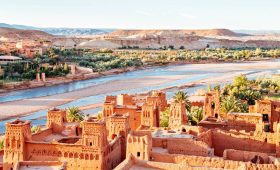
Journeying toward Ouarzazate feels like walking onto a film set, and for good reason. This region is the backbone of Morocco’s cinematic heritage. The crown jewel is the Ksar of Aït Benhaddou, a labyrinthine fortress of sun-dried brick that seems to grow directly out of the hillside.
Exploring this UNESCO site is an exercise in imagination. As you climb to the granary at the summit, you overlook the Ounila Valley, a scene that has remained virtually unchanged for centuries. Whether you are a cinephile visiting the nearby Atlas Studios or a history buff, the sheer architectural bravery of these mud-and-straw skyscrapers is breathtaking.
3. The Cascading Waters of Ouzoud
To find the greenest corner of the kingdom, head northeast to the Cascades d'Ouzoud. This is where the Atlas Mountains decide to show off. Three distinct tiers of water plunge into a deep, verdant canyon, creating a microclimate that feels like a tropical oasis hidden in a desert nation.
The best way to experience Ouzoud is to follow the winding trails down to the riverbank, passing ancient olive mills along the way. You’ll likely be greeted by wild apes who swing through the trees with cheeky confidence. Whether you’re crossing the river on a makeshift reed raft or simply enjoying the spray of the falls, Ouzoud is a masterclass in natural grandeur.
4. Coastal Serenity in Essaouira
For a breath of fresh air—literally—the drive west to Essaouira is essential. The “Wind City of Africa” replaces the heat of Marrakesh with a cool, Atlantic mist. The atmosphere here is distinctly different: more relaxed, more musical, and deeply artistic.
The white-washed Medina, framed by bright blue shutters, is a paradise for walkers. You can stroll along the Sqala de la Ville, where old brass cannons still point toward the crashing waves, or watch the artisans carve intricate patterns into fragrant Thuya wood. Don’t leave without visiting the port at noon to see the iconic blue wooden boats return with their haul of sea urchins and silver fish.
5. The Draa Valley and the Zagora Frontier
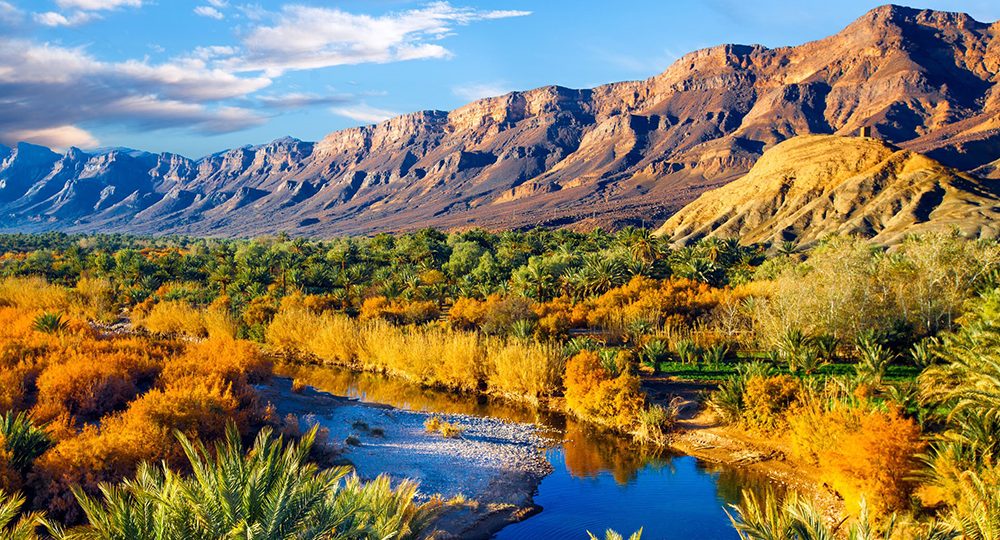
If you want to feel the ancient pulse of the caravan routes, Zagora is your destination. This is the “Door to the Desert,” famous for the legendary sign pointing toward Timbuktu. The drive takes you through the Draa Valley, a lush ribbon of millions of date palms snaking through the arid mountains.
Zagora offers a rugged, stony beauty. It’s a place where you can visit subterranean pottery workshops in Tamegroute or explore ancient libraries filled with Quranic manuscripts. A night in a desert camp here provides a raw, intimate encounter with the Sahara’s nomadic traditions without the long transit times of the deeper dunes.
6. Alpine Refreshment in the Ourika Valley
Le Vallée de l'Ourika is Marrakesh’s backyard, a cool escape nestled in the High Atlas. This is where nature feels most intimate. The road follows a rushing mountain river, lined with terraces where locals serve tea with fresh mint plucked from the banks.
The village of Setti Fatma serves as the base for a scenic hike to its seven waterfalls. It’s a tactile experience—clambering over boulders and crossing wooden bridges. It’s the perfect spot for a slow lunch, with your table set directly in the stream, allowing the cold mountain water to flow over your feet while you enjoy a traditional Berber tagine.
The Legendary Spectacle of Fantasia Chez Ali
No Moroccan adventure is truly complete without experiencing the sheer theatrical power of the Restaurant Fantasia Chez Ali. Often described as a fever dream of Arabian nights, this evening gala is a Marrakesh institution that every visitor should witness at least once.
Located in a sprawling palatial complex, the evening begins under massive, embroidered Caidal tents. As you feast on a lavish spread of Harira soup, slow-cooked Méchoui, and mounds of couscous, the air is filled with the sounds of tribal musicians and acrobats from across the kingdom.
The grand show takes place in a massive central arena. The Tbourida—or Fantasia—is a breathtaking display of traditional warfare and horsemanship. Dozens of riders in flowing white robes gallop at breakneck speed, firing their muskets in a single, deafening boom that echoes off the walls. With flying carpets, belly dancers, and a sky lit by fireworks, Chez Ali is a sensory overload in the best possible way. It is the definitive way to toast to your Moroccan journey before the city’s red walls call you back for one last night.